Paver Driveway and Sidewalk Install at Green Lake
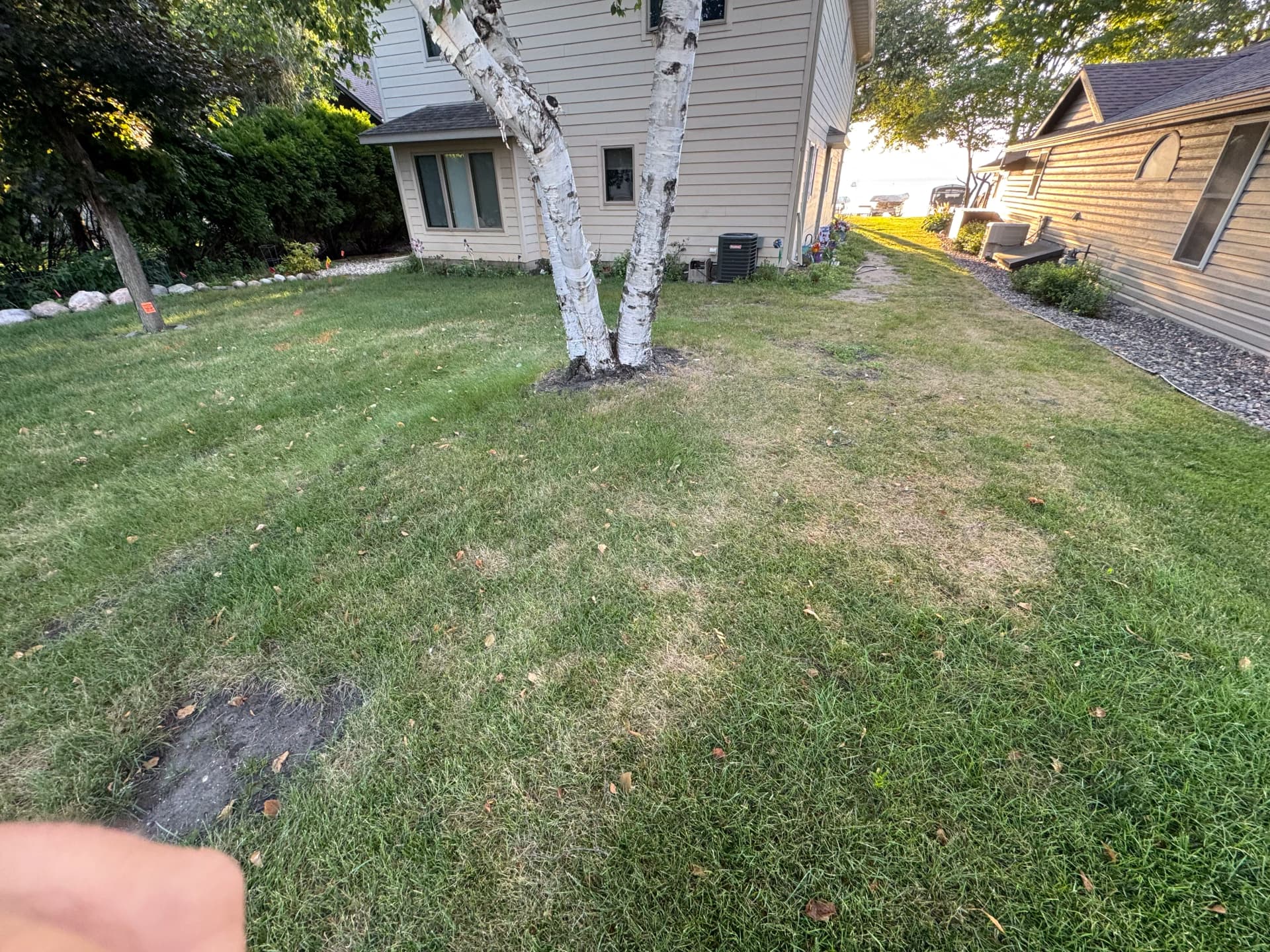
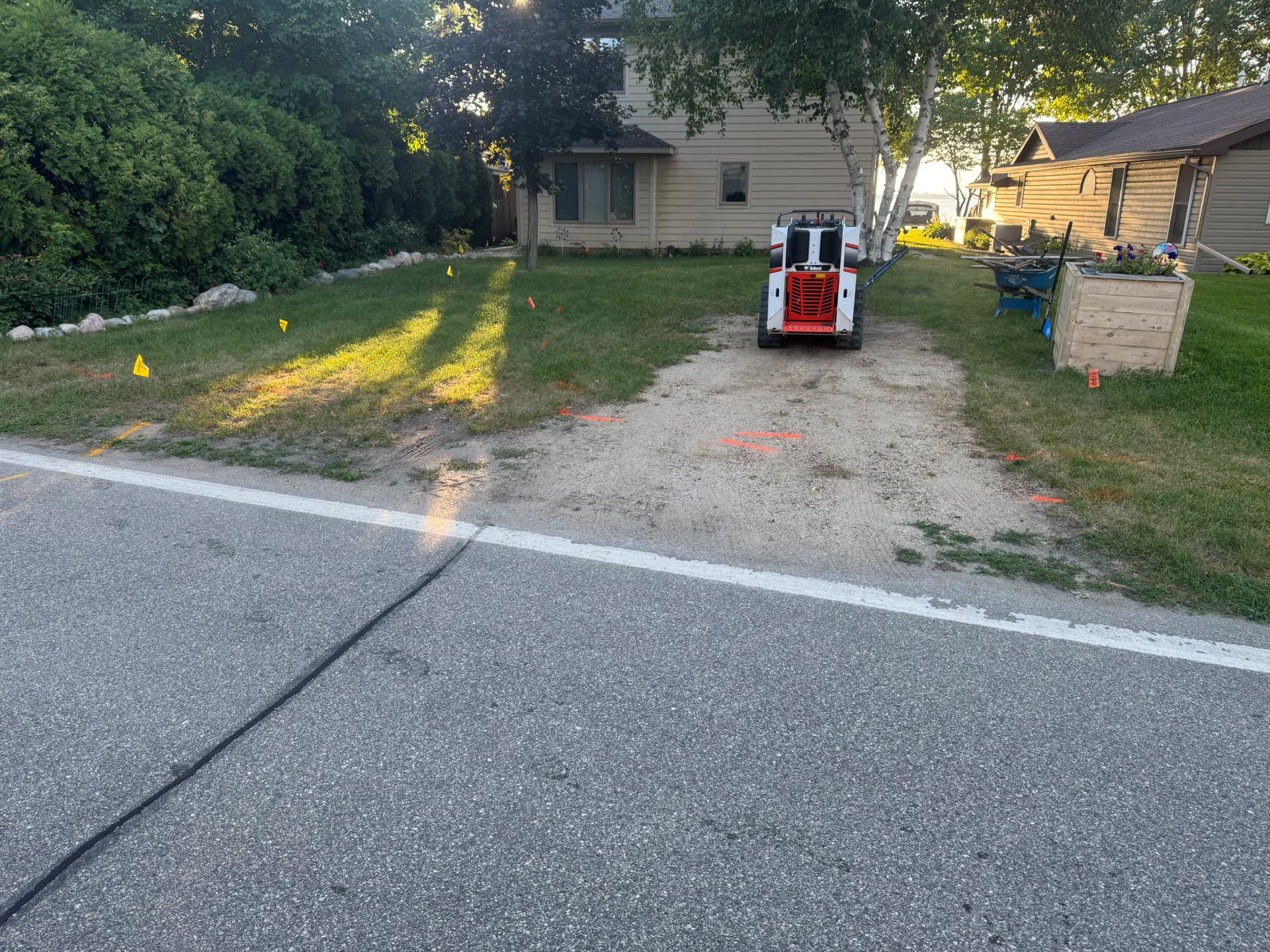
Here's what we were working with - a bare dirt driveway area and an undefined path running along the side of the house. No real structure, no clean edges, just a rough entry that didn't do the property any favors. For a lakefront home, that's a missed opportunity.
We started by marking everything out and getting the ground prepped with the skid steer. Utility flags and paint marks went down before any dirt moved. That part matters more than people realize - proper excavation and a solid base are what separate a paver driveway that lasts decades from one that shifts and settles in a few years.
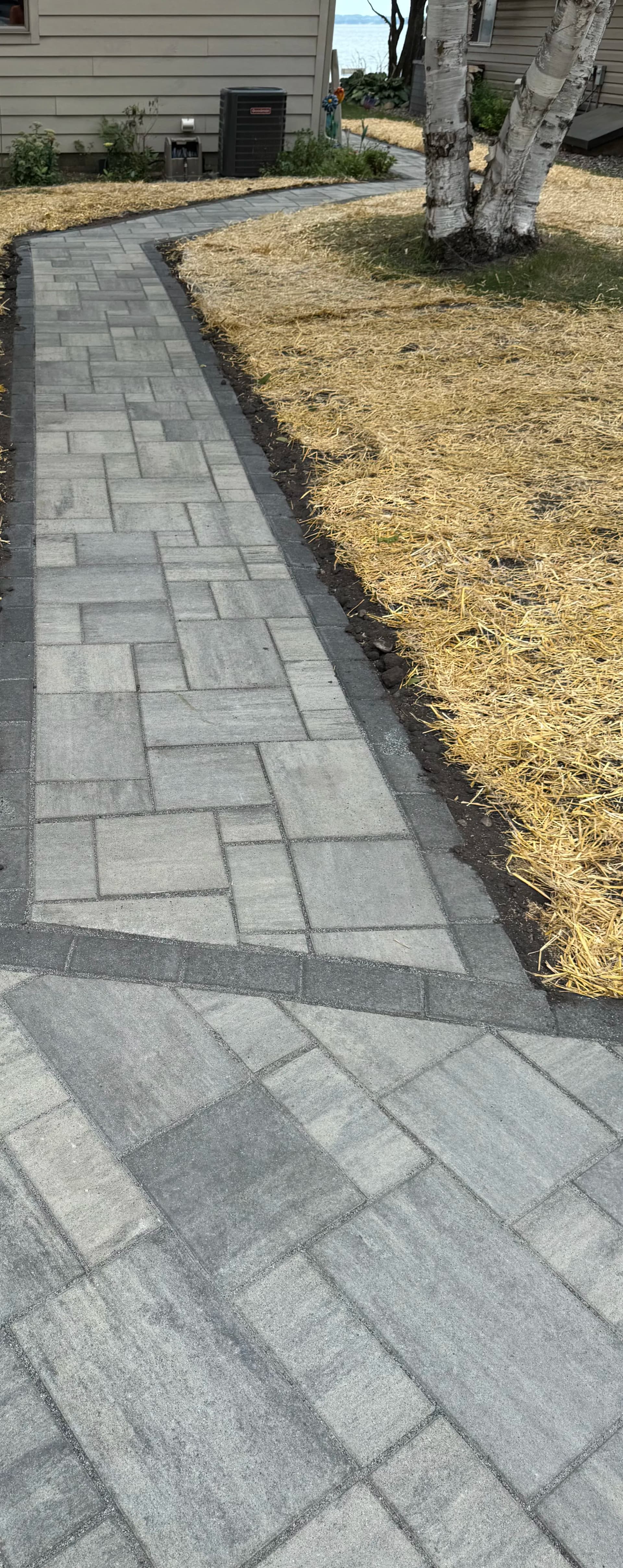
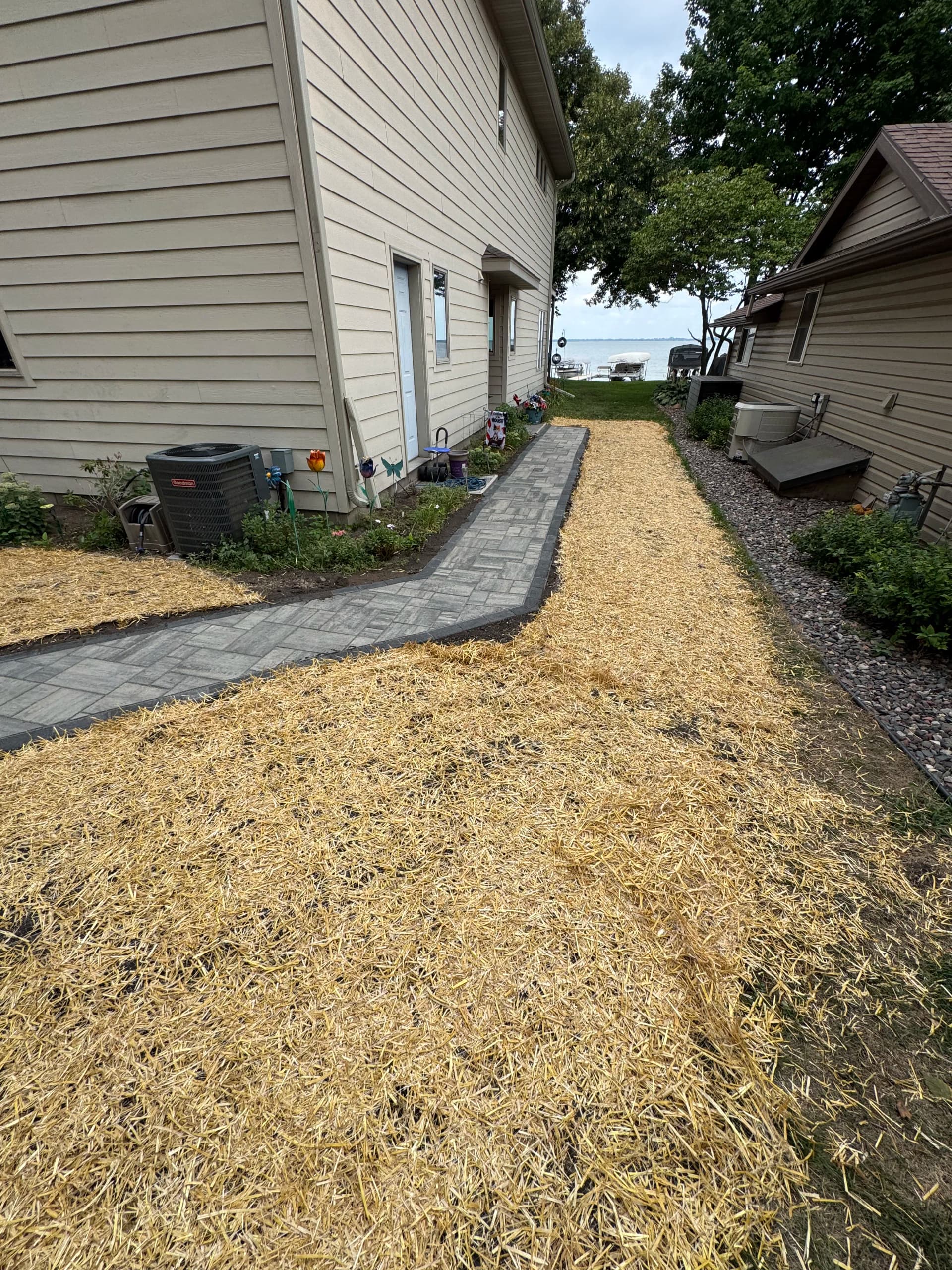
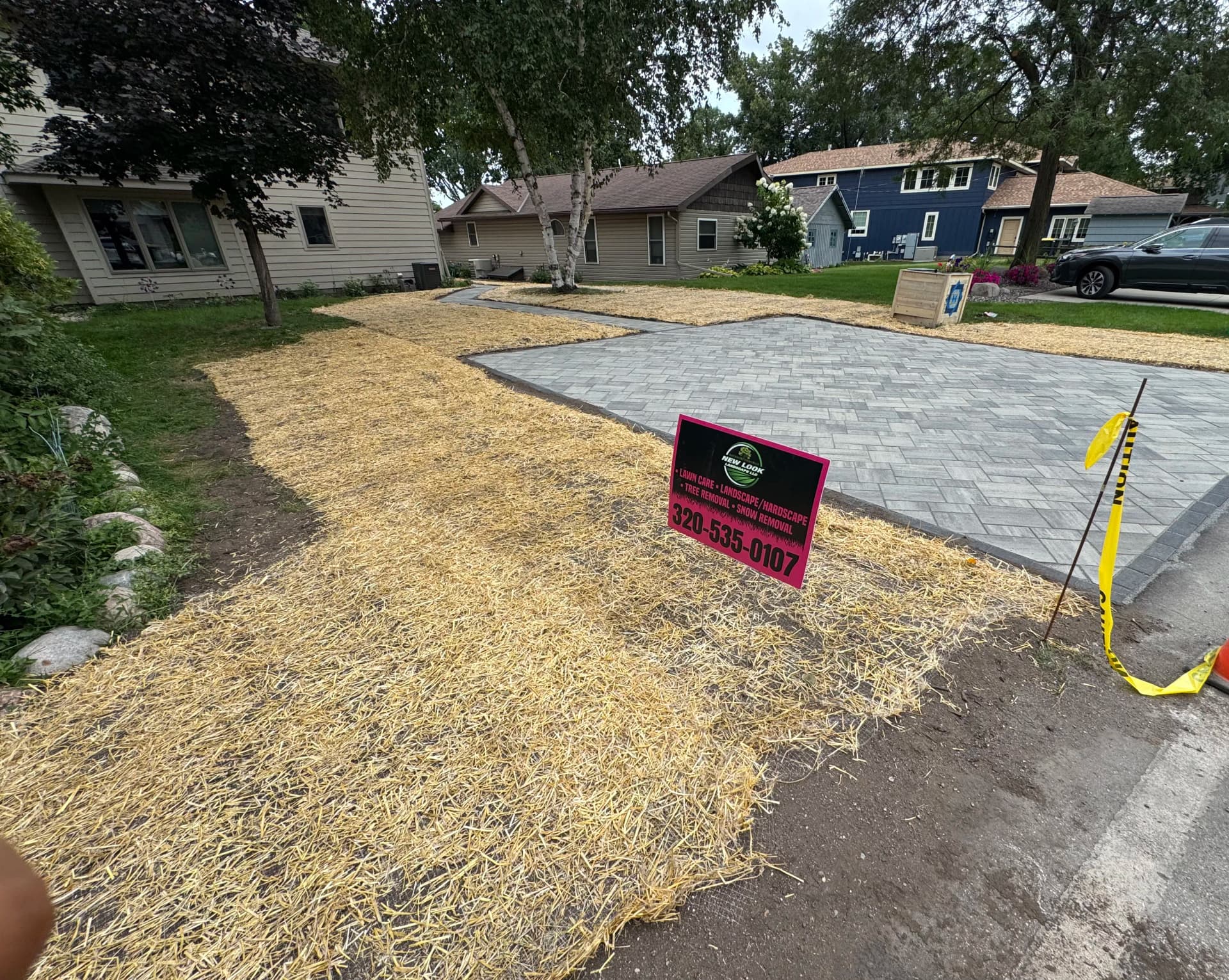
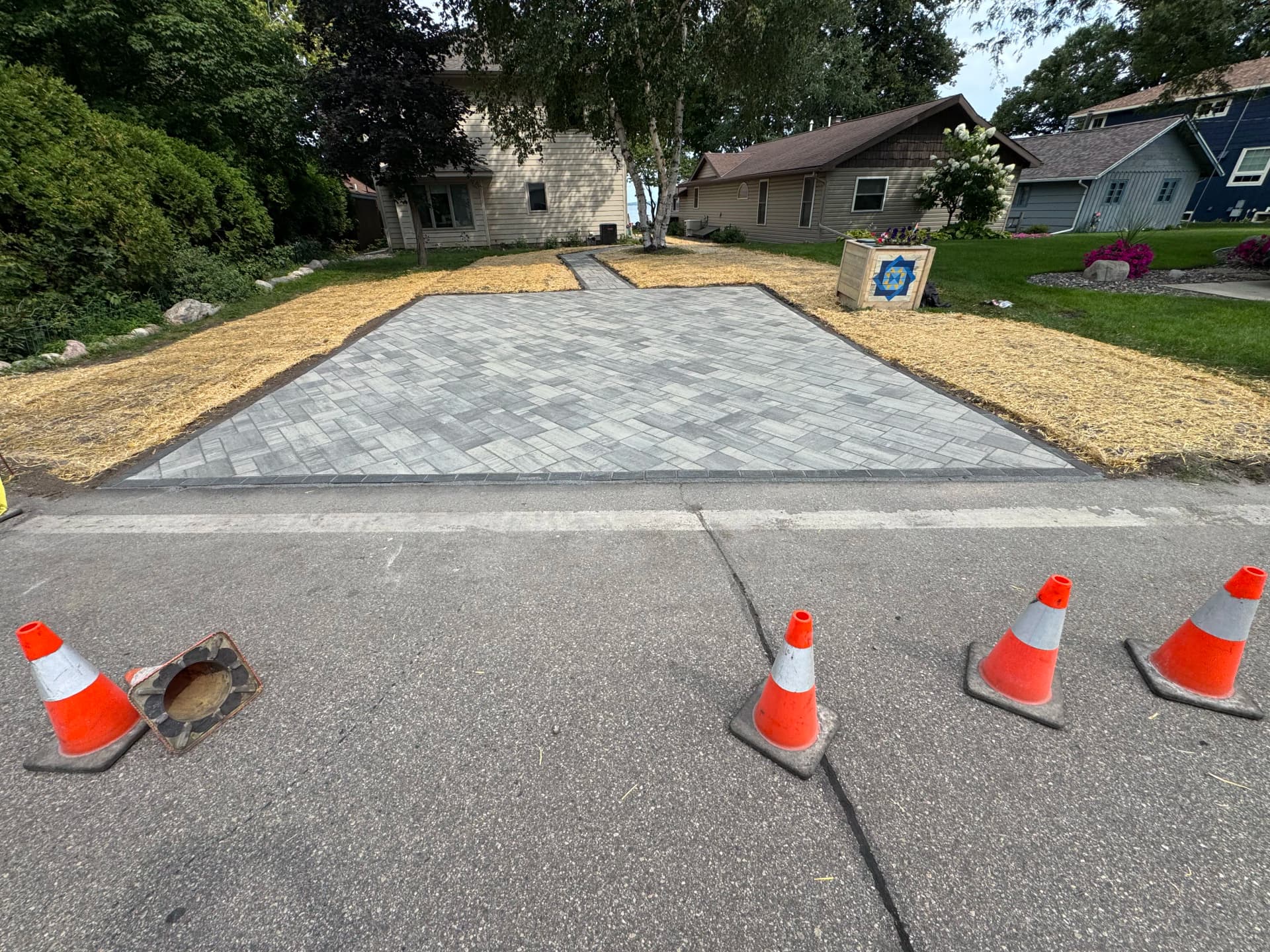
The driveway came together as a wide, well-proportioned paver pad using a running herringbone-style layout with a darker border paver framing the entire perimeter. That border detail is one of those things that takes a good installation from looking decent to looking intentional. The sidewalk follows the same design language - same pavers, same border - so the whole front of the property ties together cleanly.
We also handled the landscape side of things. After the hardscape was locked in, we prepped and seeded the surrounding lawn areas and laid straw to protect the seed while it establishes. That's the kind of detail that gets overlooked on a lot of hardscape jobs - we'd rather hand the homeowner a finished product they don't have to chase down.
A paver driveway and sidewalk like this one isn't just a curb appeal upgrade. It's a surface that handles freeze-thaw cycles better than plain concrete, drains more effectively, and stays repairable down the road. One paver out of place can be swapped without jackhammering the whole thing. That's the long-term value in a job like this.