Lawn Seeding Done Right at Lake Koronis
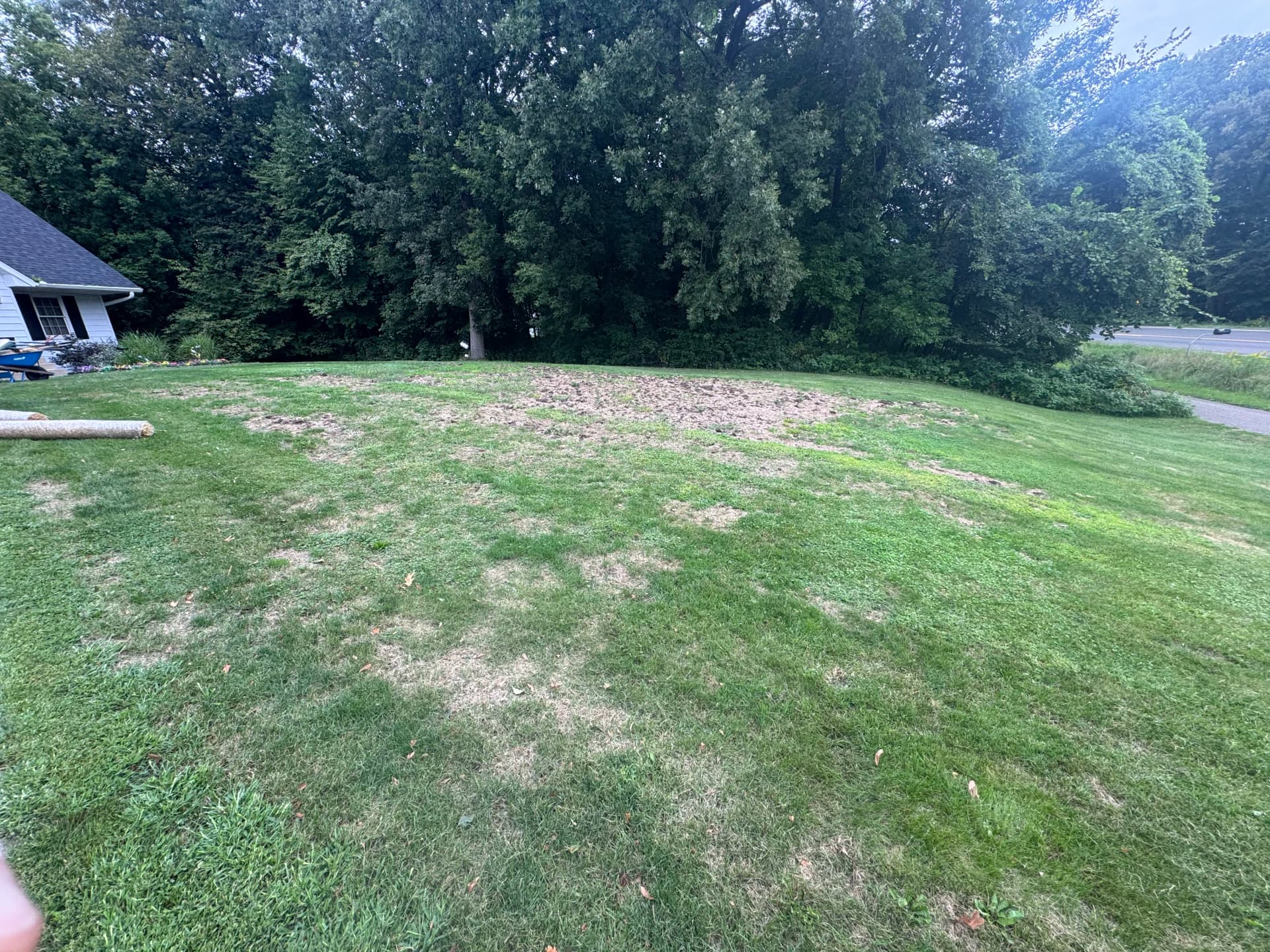
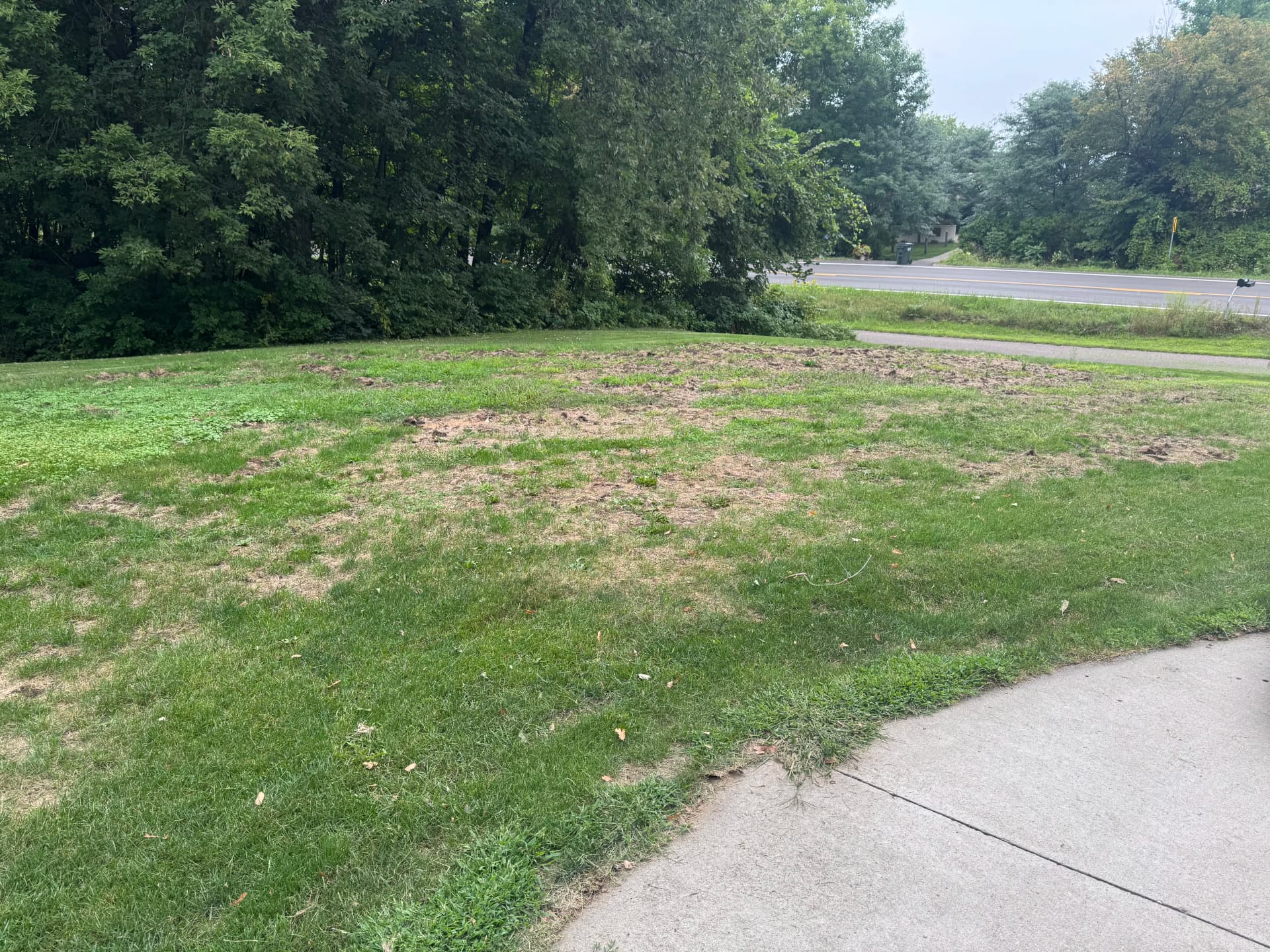
A thin, patchy lawn is one of those problems that just keeps getting worse if you ignore it. Bare spots spread. Weeds move in. Before long, you've got more dirt than grass. That's exactly what we were dealing with at this Lake Koronis property - a lawn that had seen better days, with large bare and struggling areas taking over a big chunk of the yard.
The prep work is where this kind of job is won or lost. You can throw seed down on bad soil and get nothing. We made sure the ground was properly worked and ready before anything went down. That's the part most people skip, and it's why DIY seeding attempts so often fall flat.
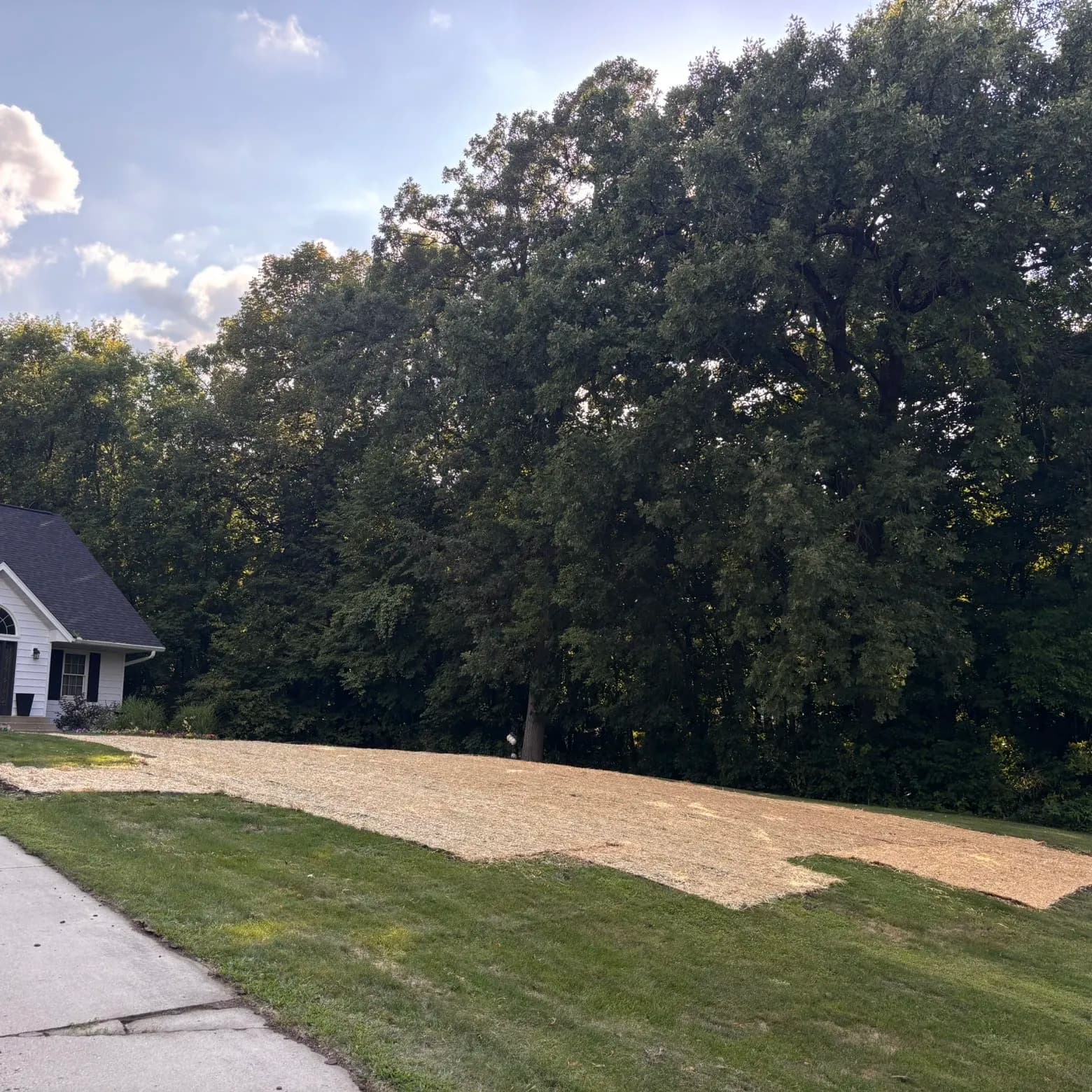
Once the ground was prepped, we got the seed down and covered it with straw to protect it. The straw layer does a few important things - it holds moisture in, keeps the seed from washing away, and gives it a stable environment to germinate. You can see the coverage across the treated area, blending right up against the existing turf.
Fall is actually one of the best times to seed a lawn in Minnesota. Cooler temps and more consistent moisture give new grass a real shot at establishing strong roots before winter sets in. This Lake Koronis lawn is set up well for a solid recovery come spring.